
The Historical Origins of Chinese Filigree Craftsmanship
The Art of Filigree Inlay: A Luminous Journey Spanning Millennia
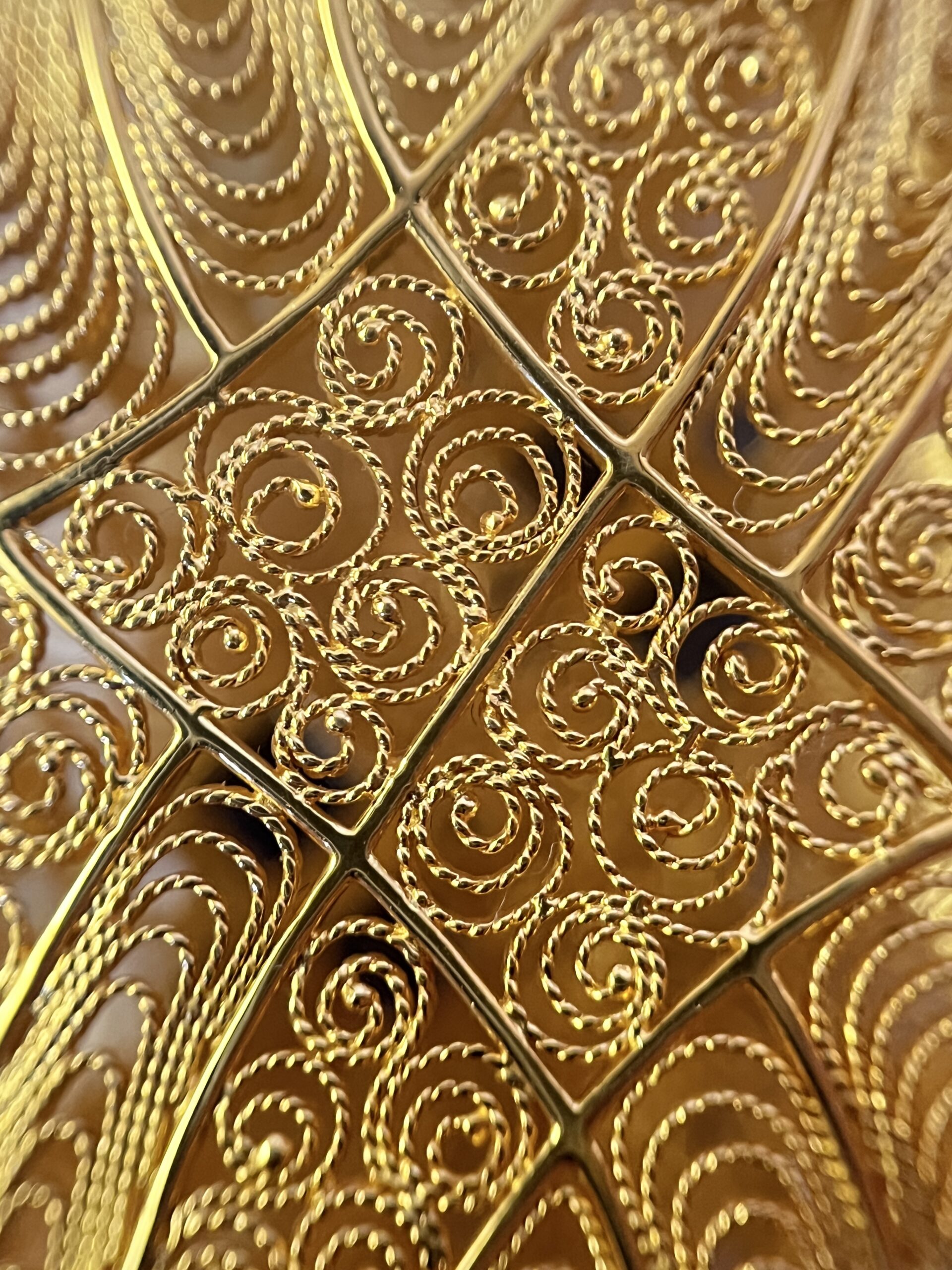
As the foremost of the “Eight Great Crafts of Yanjing, “Filigree Inlay / Filigrana” (花絲鑲嵌) boasts a rich and ancient history, revered as the pinnacle of traditional Chinese gold and silver craftsmanship. With its exquisitely refined techniques and dazzling artistic impact, it has left an illustrious mark on the annals of Chinese civilisation.
Origins: From Incipience to Imperial Splendour
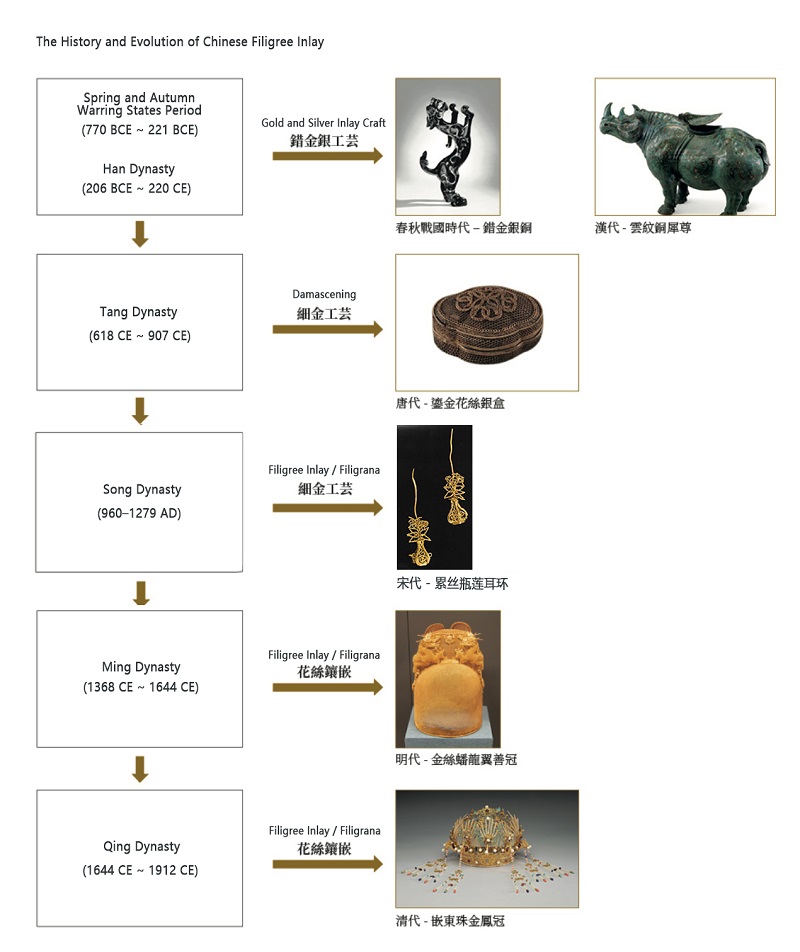
The genesis of Chinese filigree inlay craft can be traced back to the Spring and Autumn / Warring States Period (770 BCE – 221 BCE), with the emergence of gold and silver inlay craft, also known as Damascening. During this era, techniques for embedding thin gold or silver sheets and fine wires onto the surface of bronze vessels were already mastered, marking the advent of sophisticated metal ornamentation.
By the Han Dynasty (206 BCE – 220 CE), advancements in gold and silver refining led to the maturation of fine wire-drawing techniques. Concurrently, fine metalwork craftsmanship experienced its initial development. Archaeological discoveries of gold and silver artefacts from the Han Dynasty reveal intricate weaving and inlay traces, indicative of this burgeoning artistry.
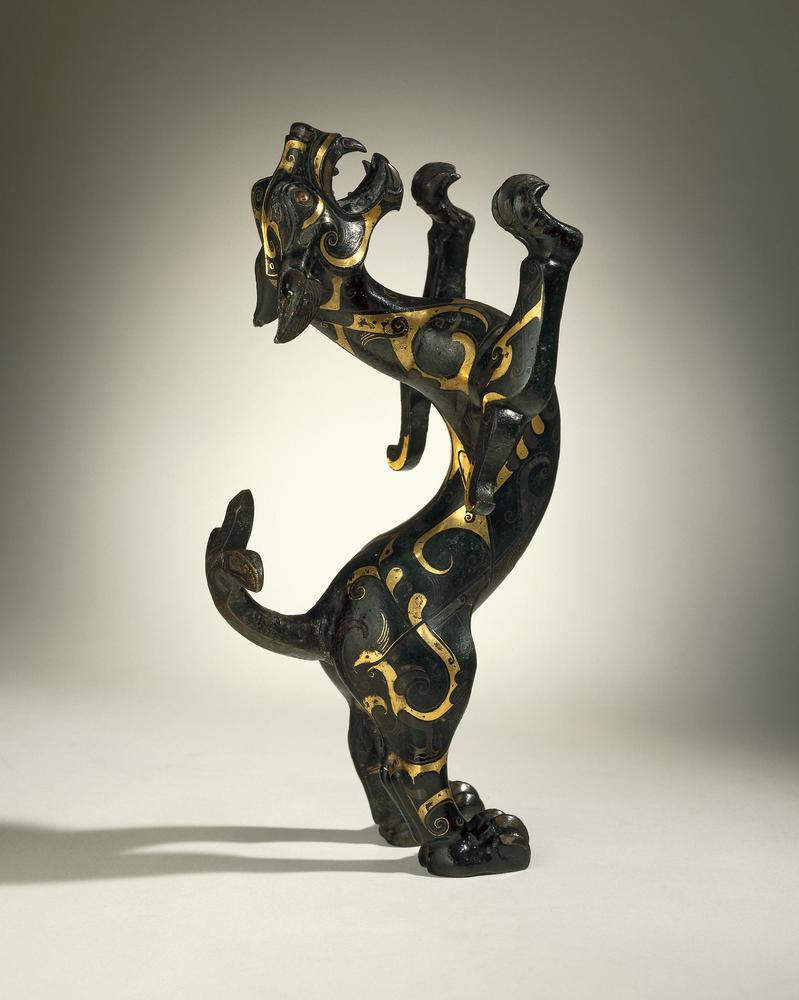
“Spring and Autumn / Warring States Period” 春秋戰國時代 – 錯金銀銅翼虎
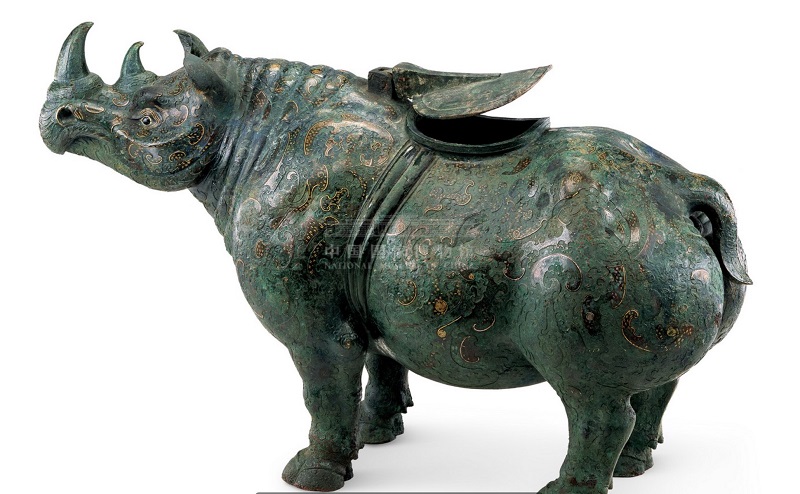
“Han Dynasty”
漢代 – 雲紋銅犀尊
Maturation of Filigree Craft: Imperial Secrecy, Emblem of Opulence
It was during the Tang Dynasty (618 CE – 907 CE) that fine metalwork ornamentation truly established its distinctive style and entered a period of maturation. The open and prosperous nature of the Great Tang Empire not only fostered unprecedented advancements in gold and silver craftsmanship but also introduced novel forms and decorative concepts for metalware through its exchange with Western Regions cultures.
During this era, the techniques of fine metalwork progressed rapidly. Both the precision of the craftsmanship and the artistic expressiveness of the pieces reached new heights, transforming them into sought-after luxury adornments coveted by the imperial court and aristocracy.
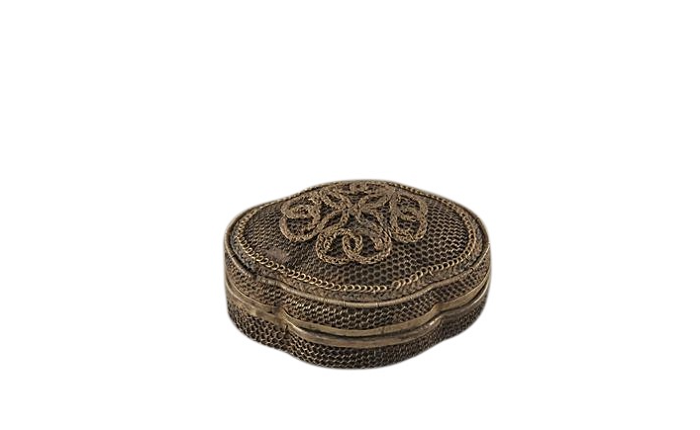
“Tang Dynasty” 唐代 – 鎏金花絲銀盒
Subsequent Developments: The Song Dynast
During the ensuing Song Dynasty (960 CE – 1279 CE), social aesthetics gravitated towards a more understated elegance. Consequently, fine metalwork craftsmanship pivoted to emphasise fluid lines and delicate forms. The sophisticated filigree technique found widespread application in women’s hair ornaments and daily adornments, making these pieces more integral to everyday life and transforming them into accessible works of art.
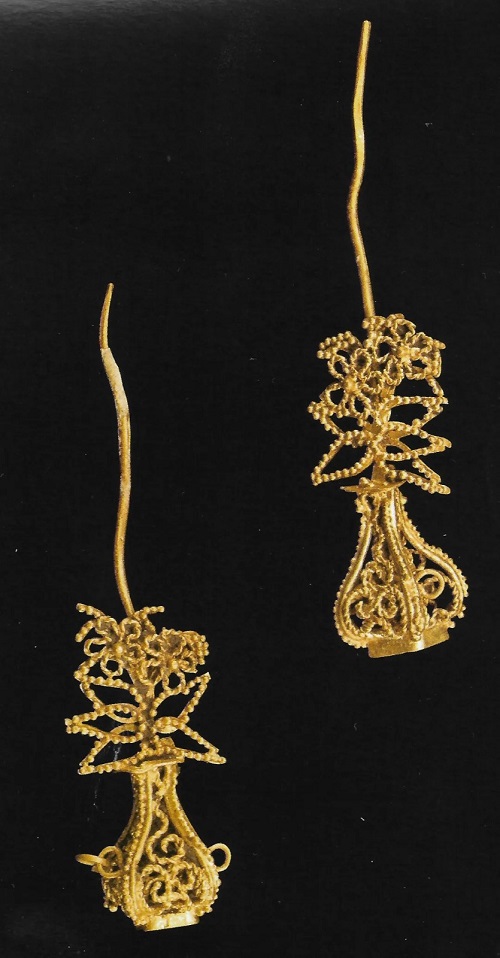
“Song Dynasty”宋代 – 累絲瓶蓮耳環
Zenith of Craftsmanship: The Ming and Qing Dynasties
During the Ming and Qing Dynasties (1368 CE – 1912 CE), the combination of filigree and inlay techniques reached its technical zenith. The Ming imperial court’s fondness for gold and silver jewellery attained an unprecedented scale. The Imperial Household Department established a dedicated workshops, assembling the nation’s most skilled artisans to exclusively craft imperial regalia, crowns, and ornaments.
Among these, the most iconic piece is Emperor Wanli’s imperial crown from the Ming Dynasty – the “Gold Filigree Coiling Dragon Crown”. This crown, meticulously woven from countless gold threads as fine as human hair, is revered as a groundbreaking masterpiece of filigree and inlay.
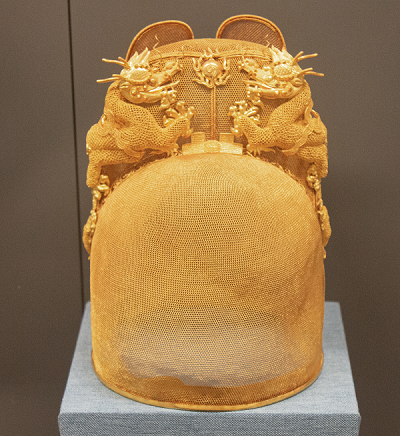
“Ming Dynasties” 明代 – 金絲蟠龍翼善冠
Further Refinement: The Qing Dynasty
Building upon the foundations laid during the Ming Dynasty, the Qing Dynasty witnessed the further evolution of filigree techniques, including piling (duilei), clasping (qiasī), and kingfisher feather inlay (diancui). This development rendered the craftsmanship even more opulent and intricate.
A prime example is the renowned Qing Dynasty relic, the “Gold Phoenix Crown with Embedded Eastern Pearls”. This piece symbolises the supreme imperial power and exquisite aesthetic of the era, standing as a representative masterpiece of filigree and inlay from this period. Throughout both the Ming and Qing dynasties, filigree and inlay craft remained one of the most vital and highly secretive specialisms within the Imperial Household Department’s workshops, its mastery consistently inspiring awe.
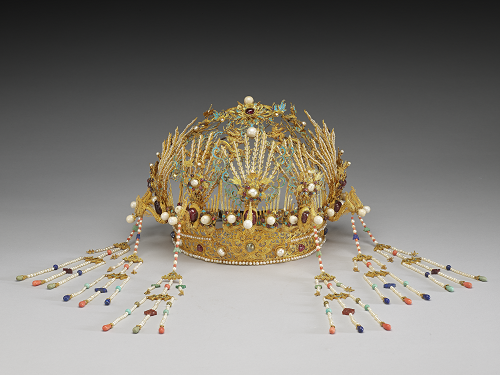
“Qing Dynasties” 清代 – 嵌東珠金鳳冠
— The Founders of Sonja T. Jewellery