
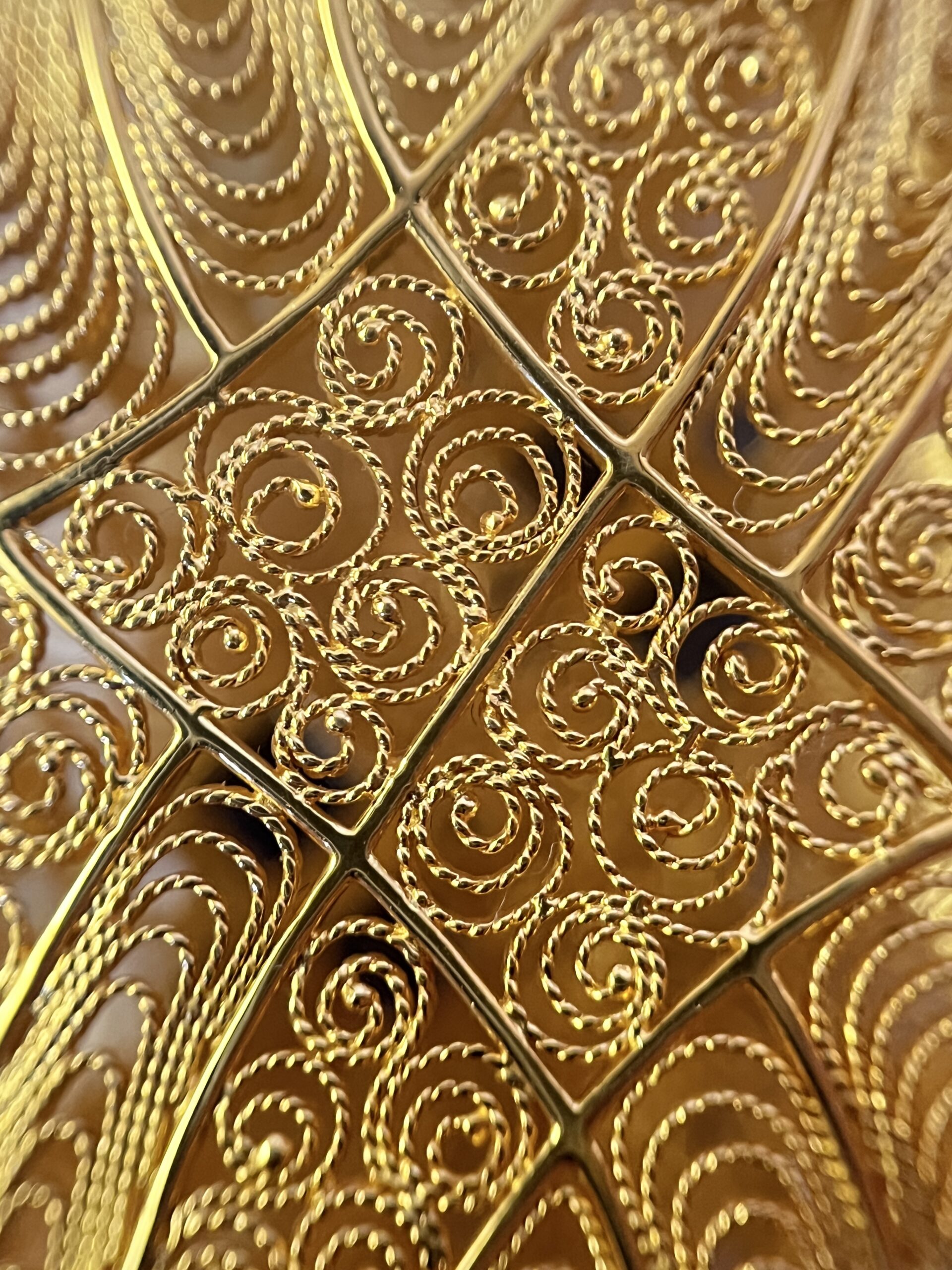
Filigree inlay, a dazzling Chinese “fine gold craft,” dates back to the Warring States period (475–221 B.C.). Once reserved for imperial courts in the Tang dynasty and perfected in the Ming–Qing eras, it lives on today in refined, handcrafted luxury jewelry—where ancient artistry meets modern elegance.

1. What Is Filigree Inlay?
Definition and origins
-
Explanation of filigree inlay: combining micro metal threadwork (“filigree”) with gem mounting (“inlay”)
-
Historical roots: Warring States origins, flourishing Tang, mature Ming–Qing, intangible heritage since 2008 .
Core techniques and artistry
-
Eight-step process: qia, tian, cuan, han, dui, lei, zhi, bian .
-
Use of 0.03 mm gold thread—hair-thin complexity demanding decades of skill
2. Advantages of Filigree Inlay in the Jewelry Industry
A. Heritage Meets Luxury
-
Talk about pieces once gracing imperial courts now revitalized as luxury jewelry
-
Resonates with global high-end buyers valuing cultural depth and provenance.
B. Ultimate Craftsmanship & Durability
-
Hair-thin metal wires woven, soldered, and polished by master artisans
-
Describes tactile finesse: openwork lace feel, gem harmonization .
C. Aesthetic Versatility
-
Intricate motifs—flowers, dragons, phoenixes—can be personal/customized, balancing classical and modern tastes .
-
Fusion with jade, enamel, or international elements for fresh appeal
D. Storytelling & Emotional Value
-
Carries Chinese philosophy, symbols, and artisan passion—suitable for heritage-conscious consumers .
-
Tied to family tradition and continuity (e.g. Liu Chao in Chongqing)
3. Filigree Inlay in Contemporary Jewelry
A. Revival by Modern Masters
-
Profiles like Master Bai Jingyi, Zou Xuewen, Gu Guoqiang: from China to London exhibitions
-
Yields innovation—Hanfu-adorned lines and couture jewelry
B. Market Trends & Luxury Demand
-
Rising interest in China and Japan’s high-end segments
-
Younger affluent buyers embracing “China-style” gold with cultural meaning
C. Integration of Tradition and Modern Fashion
-
Fusion with Hanfu, combining with enamel, jade, calligraphy—delivering statement pieces .
4. Why Filigree Inlay Matters for Jewelry Buyers
-
Unmatched expert craftsmanship—decades required, each piece a master’s expression.
-
Cultural authenticity—national intangible heritage with deep meaning.
-
Design refinement—delicate, openwork, both classical and wearable.
-
Exclusivity & storytelling—bespoke narratives tied to identity.
-
Investment-worthy—heritage art with increasing international resonance, especially in Japan and global markets.
5. Choosing Quality Filigree Inlay Jewelry
-
Artisan credentials: look for certified inheritors, workshops with intangible heritage titles.
-
Material transparency: confirm 18K/24K gold, natural gems.
-
Design balance: classical motifs with wearable scale.
-
Craft evaluation: examine solder joints, gem setting, absence of rough edges.
-
Brand reputation: heritage brands often better documented/serve discerning clients.
6. Conclusion & Call to Action
Filigree inlay stands as a bridge between ancient heritage craftsmanship and modern jewelry elegance. It carries centuries of artistry and cultural legacy, now revived for discerning consumers worldwide—particularly Japan’s luxury market. For those who seek jewelry that is not only beautiful but meaningful, refined—and built to last—filigree inlay offers unmatched value. Explore collections that speak with both tradition and originality.